Kanadská hlavní burza v úterý vzrostla, protože zpráva o příměří mezi Izraelem a Íránem pomohla investorům vrátit se k rizikovějším aktivům.
V 18:15 ET index S&P/TSX 60 vzrostl o 7,7 bodu, tj. o 0,5 %.
Kompozitní index S&P/TSX vzrostl o 82,3 bodu, tj. o 0,3 %, po pondělním růstu o 111,79 bodu, tj. o 0,4 %, na 26 609,36 bodu, což je jen o málo méně než rekordní závěrečná hodnota z 12. června.
Nedávné komentáře představitelů Federálního rezervního systému posílily naděje na dřívější než očekávané snížení úrokových sazeb, zatímco trhy víkendové americké letecké údery na íránská jaderná zařízení vesměs interpretovaly jako ojedinělou událost, která nebude mít další pokračování.
Pokles cen ropy, podpořený očekáváním, že boje mezi Izraelem a Íránem nebudou mít dopad na klíčové dodávky ropy přes Blízký východ, zatížil energetické tituly. Akcie materiálového sektoru, včetně hnojiv a těžby kovů, však vzrostly, stejně jako segmenty technologií a spotřebního zboží.
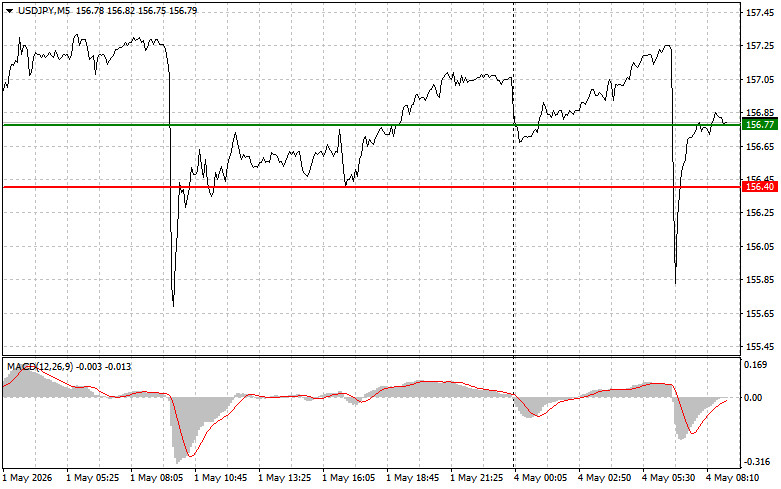
The test of the price at 156.77 occurred when the MACD indicator had moved significantly above the zero mark, which, in my opinion, limited the pair's upward potential. For this reason, I did not buy the dollar.
The Bank of Japan, remaining vigilant, is actively intervening in the currency market, as reflected in the charts. These actions aim to curb excessive depreciation of the national currency and maintain its stability. Visually, these efforts are reflected in noticeable spikes in activity, indicating the BOJ's direct intervention to stabilize the exchange rate.
Despite the central bank's efforts, a large support zone formed around the level of 156 acts as a barrier preventing deeper declines in the dollar. This area has become a key level closely monitored by market participants, as its maintenance is critical to preventing further weakening of the dollar. Any fluctuations in the exchange rate near the 156 zone will be interpreted as indicators of which side currently holds more influence. Therefore, the market is awaiting further action and the outcome of this struggle, as the preservation or break of this support level could determine the pair's further direction.
Regarding the intraday strategy, I will focus more on implementing Scenarios #1 and #2.
Scenario #1: I plan to buy USD/JPY today at the entry point around 156.91 (green line on the chart), with a target at 157.58 (thicker green line on the chart). At around 157.58, I intend to exit my long positions and open short positions in the opposite direction (expecting a movement of 30-35 pips in the opposite direction from the level). It's best to return to buying the pair on corrections and significant pullbacks in USD/JPY. Important! Before buying, ensure that the MACD indicator is above the zero mark and just starting to rise from it.
Scenario #2: I also plan to buy USD/JPY today if there are two consecutive tests of 156.65 while the MACD indicator is in the oversold area. This will limit the pair's downside potential and lead to an upward market reversal. An increase to the opposite levels of 156.91 and 157.58 can be expected.
Scenario #1: I plan to sell USD/JPY today only after updating the level to 156.65 (red line on the chart), which will trigger a rapid decline in the pair. The key target for sellers will be the level of 155.95, where I intend to exit my shorts and also open immediate longs in the opposite direction (expecting a movement of 20-25 pips in the opposite direction from the level). Sellers may return at any moment, needing just a hint from the central bank. Important! Before selling, ensure that the MACD indicator is below the zero mark and just starting to decline from it.
Scenario #2: I also plan to sell USD/JPY today if there are two consecutive tests of 156.91 while the MACD indicator is in the overbought area. This will limit the pair's upside potential and lead to a market reversal downward. A decline to the opposite levels of 156.65 and 155.95 can be expected.
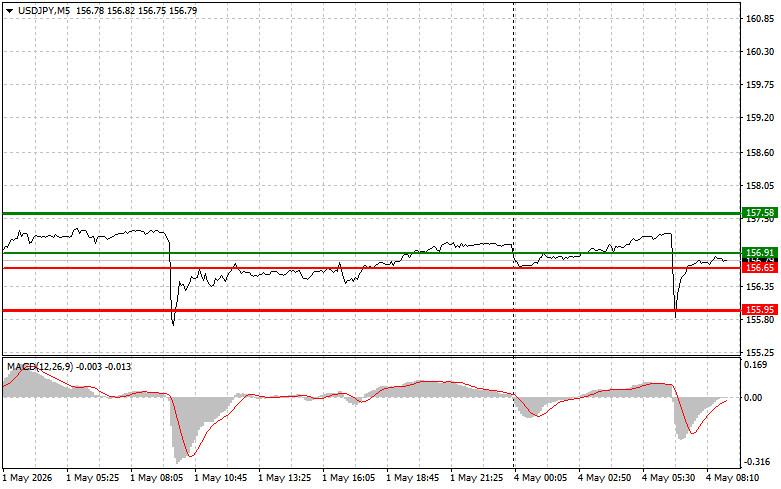
Important: Beginner traders in the Forex market need to make entry decisions very cautiously. It is best to stay out of the market before important fundamental reports to avoid sharp price fluctuations. If you decide to trade during news releases, always set stop orders to minimize losses. Without placing stop orders, you can quickly lose your entire deposit, especially if you do not use money management and trade in large volumes.
And remember, for successful trading, it is essential to have a clear trading plan, as outlined above. Making impulsive trading decisions based on the current market situation is fundamentally a losing strategy for an intraday trader.

PAUTAN SEGERA
ForexMart is authorized and regulated in various jurisdictions.
(Reg No.23071, IBC 2015) with a registered office at First Floor, SVG Teachers Co-operative Credit Union Limited Uptown Building, Corner of James and Middle Street, Kingstown, Saint Vincent and the Grenadines
Restricted Regions: the United States of America, North Korea, Sudan, Syria and some other regions.


















 Hubungi Kami