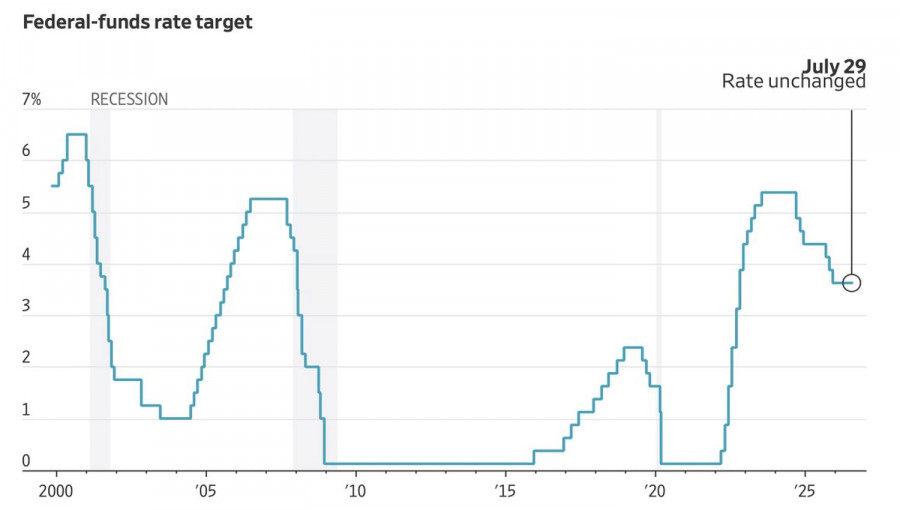
Silence is golden, but not for the chief banker. Kevin Warsh has gambled his entire chairmanship, believing that a quieter Federal Reserve provides a clearer picture of what investors think. He stated that the strategy is working. However, just an hour later, the markets proved the opposite.
The Fed held rates steady and abandoned forward guidance, citing a sharp rise in real Treasury yields since the June meeting—one of the largest inter-meeting jumps in two decades. According to Waller, the tightening of financial conditions has done part of the central bank's work itself. Investors heard otherwise. The yield on 30-year bonds jumped to 5.2%, the dollar weakened, and stocks fell. This is a classic sign of economic uncertainty, undermining trust in the central bank.
Three officials—Beth Hammack, Neel Kashkari, and Lori Logan—called for an immediate rate hike. Such unanimous dissent is rare, and a fourth or fifth opposing vote in a twelve-member Committee would be unprecedented in modern times. Warsh himself referred to this as a "good family fight." However, DBS Group describes the situation differently: the chair has plunged the markets into a monetary "hall of mirrors" where investors are "stumbling in the dark." It's in this setting that the US dollar has lost its way.
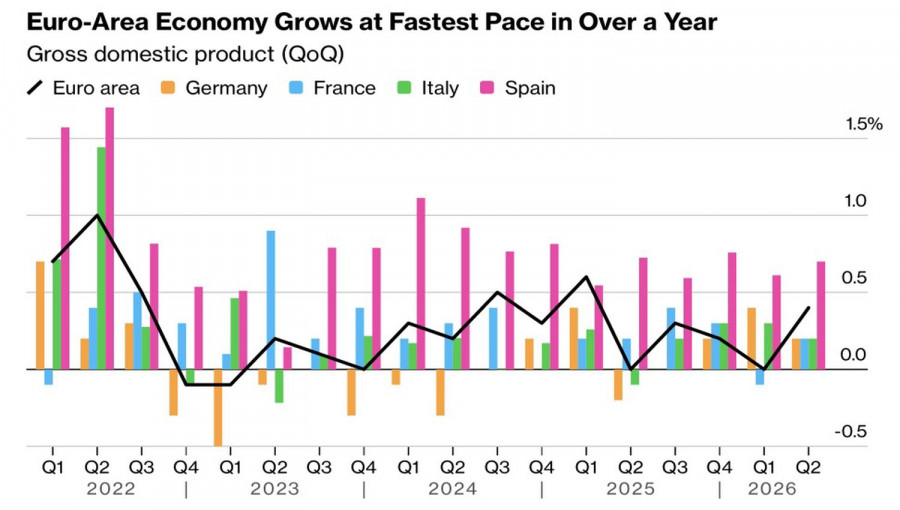
Meanwhile, the European Central Bank demonstrates much greater unity. The governing council almost unanimously hints at a rate hike in September, which gives the euro a clear advantage. The Eurozone's economy unexpectedly grew by 0.4% in the second quarter—twice the Bloomberg forecast—showing resilience against the war in Iran. Germany, France, Italy, and Spain all added synchronously.
However, Commerzbank warns that the correlation between the euro and oil is significantly stronger than that between the dollar and oil. As long as energy prices rise amid a new wave of US strikes against Iran and attacks on American forces in Jordan, inflation expectations in the Eurozone will continue to rise alongside them—unlike in the US, which has recently detached itself from oil.
This creates a paradox. The ECB is more predictable but dependent on geopolitics. The Fed is unpredictable, but geopolitics no longer guides it. According to CIBC, three dissenting votes following the unanimous June decision should keep the market prepared for interest rate hikes in September, especially with new military tensions looming over energy prices. The Committee meeting will take place on September 15-16.
In my opinion, as long as oil does not establish its direction, the euro was unlikely to solidify its advantage on Thursday. Unless, of course, Warsh himself points the way out of his mirror maze.
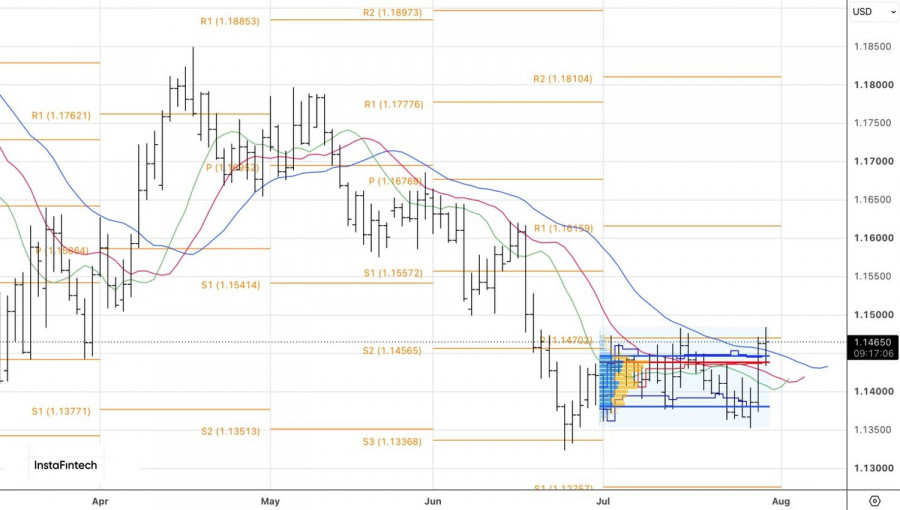
From a technical perspective, the daily chart of EUR/USD shows a storming of resistance at the pivot level of 1.1470. The success of the bulls in this endeavor would allow traders to increase the long positions established from 1.1405.
ForexMart is authorized and regulated in various jurisdictions.
(Reg No.23071, IBC 2015) with a registered office at First Floor, SVG Teachers Co-operative Credit Union Limited Uptown Building, Corner of James and Middle Street, Kingstown, Saint Vincent and the Grenadines
Restricted Regions: the United States of America, North Korea, Sudan, Syria and some other regions.










 コンタクトする