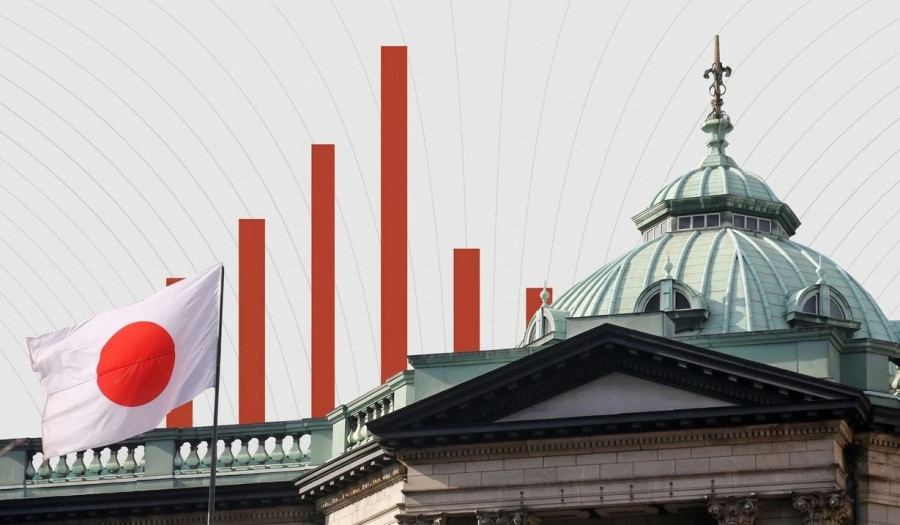
On Friday, on the last day of the week and the month, we will learn the results of the Bank of Japan's July meeting. The formal outcomes of the meeting are almost certain: the central bank will likely keep all monetary policy parameters unchanged. Therefore, all market attention will be directed toward the updated quarterly forecasts, the tone of the accompanying statement, and the rhetoric of BoJ Governor Kazuo Ueda.
Despite the preordained outcomes of the July meeting, the meeting itself is certainly not "routine." The market will assess not only the rate decision but also the central bank's readiness to return to a tightening monetary policy cycle this fall. The intrigue remains, as the latest inflation reports have shown a rather contradictory picture.
The nationwide core Consumer Price Index (CPI), excluding fresh food, accelerated to 1.6% year-on-year in June, up from 1.4% previously. The indicator remains below the BoJ's target of 2%, but it accelerated in June for the first time in several months. At the same time, core inflation, excluding fresh food and energy prices, slowed to 1.7% (from 1.8% in May), indicating a slight easing of underlying inflationary pressure. Furthermore, price growth in the services sector has also slowed, which is particularly important for the BoJ, as service inflation is seen as an indicator of sustainable internal price pressure closely linked to wage dynamics.
However, the central bank is unlikely to conclude based solely on a recent nationwide report. Much greater interest lies in the June Consumer Price Index for Tokyo, which is traditionally regarded as a leading indicator of national inflation. This report could show how quickly the depreciation of the yen and rising import prices penetrate the consumer sector.
According to the latest data, inflation in the Japanese capital accelerated compared to the previous month. Although the figure remains below the two percent mark, the very fact of acceleration indicates that the upward trend persists. The core index (Core TCPI), excluding fresh food, increased by 1.6% in June (after rising by 1.3% in the previous month), reaching a three-month high. The overall figure for Tokyo rose to 1.7% from 1.4% in May.
Notably, the July CPI data for Tokyo will be published just hours before the central bank's meeting results are announced. Most analysts expect the core Consumer Price Index (excluding fresh food) in the Japanese capital to accelerate again—this time to 1.8%, marking the fastest growth rate since February of this year. If Friday's release indeed reflects another surge in price pressures, members of the regulator may reasonably conclude that the June slowdown in the nationwide CPI was temporary, while fundamental inflationary pressures remain intact.
It should be noted that for the Japanese central bank, not only (and not so much) the current level of inflation is important, but also its stability. In this context, producer inflation plays a significant role. In recent months, pressure from producers has noticeably increased: the producer price index is rising significantly faster than consumer prices (for example, in June, the overall index reached 7.1%, while the core index remains at 1.6%), reflecting the consequences of a weak yen and rising raw material prices. This lag will inevitably be passed on to end consumers, so the BoJ will surely become concerned about the likelihood of a new wave of price pressure in the second half of the current year.
Overall, the macroeconomic picture remains quite mixed. Many factors (rising wages following the productive spring "shunto," a tight labor market, and increasing inflation expectations) strengthen the position of the hawkish wing of the BoJ. On the other hand, risks to economic growth remain. Despite relatively stable corporate activity and quite strong business sentiment indicators, the Japanese economy continues to face the consequences of the Middle Eastern crisis, expensive energy resources, and ongoing uncertainty regarding global trade (in the context of Trump's tariff policy). Under such conditions, excessively aggressive interest rate increases could intensify pressure on domestic demand, so the tightening of monetary policy in June is likely to prompt a wait-and-see approach.
Thus, in my opinion, the BoJ will keep the interest rate unchanged following the July meeting, reaffirm its readiness to continue the gradual normalization of monetary policy, and likely adjust inflation forecasts upward (or highlight increased inflation risks). At the same time, the central bank will most likely maintain a cautious wording that future decisions "will depend on incoming data on inflation, wages, and economic activity."
In such a scenario, risks for USD/JPY will shift toward a decline, so traders should consider selling the pair on northern price spikes. The market has already priced in the maintenance of the status quo. At the same time, any hawkish signals from Ueda regarding further policy normalization (especially if the July CPI report for Tokyo comes out in the "green zone") could strengthen the yen.

QUICK LINKS
ForexMart is authorized and regulated in various jurisdictions.
(Reg No.23071, IBC 2015) with a registered office at First Floor, SVG Teachers Co-operative Credit Union Limited Uptown Building, Corner of James and Middle Street, Kingstown, Saint Vincent and the Grenadines
Restricted Regions: the United States of America, North Korea, Sudan, Syria and some other regions.


















 Contact Us