Akcie společnosti Rocket Lab, amerického hráče v oblasti vesmírných technologií, v úterý dosáhly historického intradenního maxima 45,48 USD – nejvyšší hodnoty od vstupu firmy na burzu v roce 2020.
Závěrečná cena akcie se vyšplhala na nové rekordní hodnoty poté, co analytici banky Citi zvýšili cílovou cenu akcií z 33 na 50 USD.
Analytik Citi Jason Gursky ve své zprávě uvedl, že revidovaný výhled lépe reflektuje vyzrálejší fázi obchodního modelu Rocket Lab (RKLB). Banka očekává, že do roku 2029 by společnost mohla dosáhnout tržeb až 2,6 miliardy dolarů, a to díky plánovaným 20 startům rakety Neutron ročně a navazujícím zakázkám v oblasti satelitních technologií – zejména pro americké vládní programy. Tyto projekce významně přispěly ke zvýšení optimismu investorů a dalšímu růstu ceny akcií.
Den před tím, tedy v pondělí, akcie uzavřely s nárůstem o 10,7 %, zatímco v úterý přidaly dalších 3,2 %, což znamená, že za dva dny si připsaly více než 14 %. Tento vývoj ukazuje, jak silně trh reaguje na očekávání spojená s budoucími výnosy firmy a s pokroky v oblasti nových technologií.
Rocket Lab sídlí v Long Beach v Kalifornii a v posledních letech se stala důležitým jménem v rychle se rozvíjejícím vesmírném sektoru. V červnu společnost uskutečnila svůj 68. start rakety Electron, při kterém úspěšně vynesla satelit pro komerčního zákazníka, jehož identita zůstává neveřejná. Tento start přitáhl pozornost zejména tím, že šlo o druhý start ze stejného místa během méně než 48 hodin – nový rekord pro Rocket Lab.
Tuto schopnost opakovaného a rychlého vypouštění satelitů ocenil také Andrew Chanin, generální ředitel společnosti Procure AM, která provozuje fond Procure Space ETF (UFO). Podle něj firma dosáhla značného pokroku díky opakovaným úspěšným startům, což ji posouvá do pozice důvěryhodného partnera pro vládní i soukromé zakázky.
Podle Chanina vzbuzuje velká očekávání zejména nová raketa Neutron, která by měla být vypuštěna ještě letos. Tento nosič bude schopen vynášet větší náklady, což by Rocket Lab mohlo otevřít dveře k větším a výnosnějším kontraktům – například v oblasti obranného průmyslu nebo při budování rozsáhlejších satelitních konstelací.
Analytici nejsou jediní, kdo přispívá k rostoucímu optimismu okolo Rocket Lab. Také KeyBanc Capital Markets v červnu zvýšila cílovou cenu akcií z 29 na 40 dolarů. Ve své analýze zmínila silnou dynamiku v segmentu startovacích služeb i pokrok v oblasti kosmických systémů. Zdůraznila rovněž promyšlenou strategii fúzí a akvizic, kterou firma využívá ke zvyšování svých technologických kapacit.
V roce 2025 akcie Rocket Lab zaznamenaly nárůst o více než 75 %, čímž výrazně překonaly širší trh – index S&P 500 za stejné období vzrostl pouze o 6,4 %. Tento rozdíl reflektuje nejen specifickou pozici firmy na trhu, ale také sílící zájem investorů o společnosti, které kombinují technologickou inovaci, vládní zakázky a růstový potenciál.
Kromě technických a provozních výsledků pomohla akciím Rocket Lab i geopolitická situace. V posledních týdnech došlo ke střetu mezi prezidentem Donaldem Trumpem a Elonem Muskem, zakladatelem společnosti SpaceX, která je hlavním konkurentem Rocket Lab. Tato nejistota vyvolává otázky ohledně budoucího postavení SpaceX v rámci amerických vládních kontraktů. Pokud by došlo k omezení spolupráce mezi SpaceX a federálními úřady, mohla by Rocket Lab těžit z uvolněného prostoru na trhu, zejména v segmentu obranných a strategických zakázek.
Zatímco raketa Electron se osvědčila jako spolehlivá a efektivní pro menší náklady, právě raketa Neutron má být tím, co posune Rocket Lab do vyšší ligy. Díky větší nosnosti se bude moci firma ucházet o komplexnější mise, včetně dodávek zásob na orbitální stanice nebo vynášení větších satelitních celků pro rozsáhlé komerční i státní projekty.
Plánovaných 20 startů ročně od roku 2029, které zmínila Citi, naznačuje, že Rocket Lab chce zaujmout významné postavení v rámci globálního vesmírného průmyslu. Pokud se firmě podaří naplnit očekávání a udržet si tempo technologického vývoje, má potenciál stát se nejen lídrem v oblasti lehkých nosičů, ale i relevantním hráčem ve středně těžké třídě.
Vzhledem k současnému vývoji a rostoucímu zájmu analytiků, investorů i vládních organizací se zdá, že Rocket Lab má nakročeno k další kapitole svého příběhu. Historická maxima akcií tak nejsou jen výsledkem spekulací, ale odrazem důvěry trhu v dlouhodobou strategii firmy, která staví na technologickém pokroku, provozní efektivitě a připravenosti na budoucí výzvy vesmírného průmyslu.

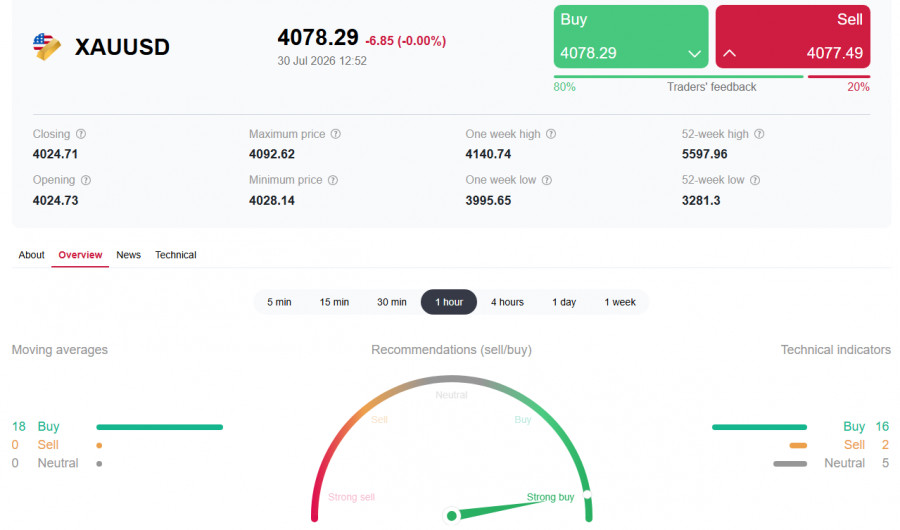
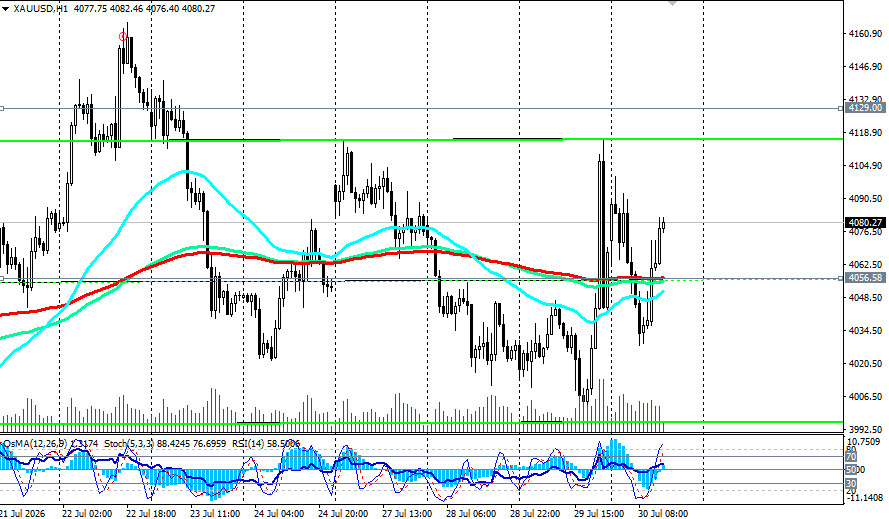
As of the beginning of the American session on Thursday, July 30, XAU/USD is trading around 4076.00, retreating from the weekly high of around 4100.00 reached the day before. The market is holding steady in anticipation of two key events: the release of preliminary data on US GDP for the second quarter and the Personal Consumption Expenditures (PCE) price index — the Fed's preferred measure of inflation.
The degree of uncertainty surrounding the future trajectory of monetary policy remains high. According to the CME FedWatch tool, markets are pricing in about a 35% probability that the Fed will maintain its current rate at the September meeting, while the likelihood of tightening by the end of the year is estimated at approximately 85%.
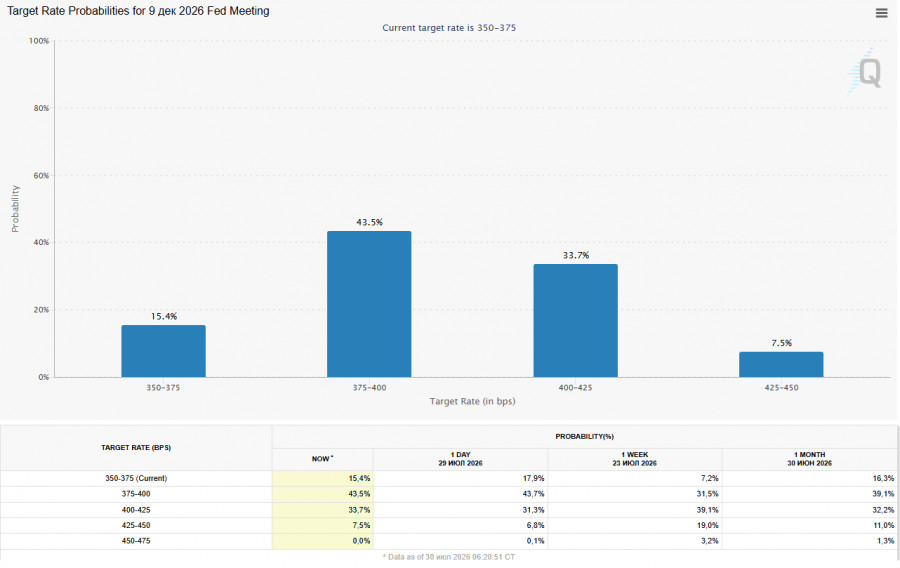
However, three FOMC members (Beth Hammack, Neel Kashkari, and Lori Logan) voted for a 25-basis-point increase, marking the most significant division since 2016. The new Fed Chair, Kevin Waller, confirmed the commitment to achieving the 2% inflation target during the press conference but refrained from providing clear signals about the future trajectory of interest rates.
The renewed geopolitical tensions in the Middle East also heighten pressure on gold. Late Wednesday, American military forces struck Iran in response to Iranian missile attacks on US forces in the region. Iranian media reported strikes against the city of Abadan and Qeshm Island. This has restored the geopolitical premium in energy prices and strengthened demand for the dollar as a "safe haven," further pressuring gold.
The key factor determining gold's dynamics remains the balance between inflation risks from rising energy prices and expectations of future Fed policy easing. On one hand, the escalation of the conflict in the Persian Gulf and the ongoing blockade of the Strait of Hormuz (through which about 25% of maritime oil supplies typically pass) keep energy prices elevated, intensifying inflation expectations and arguments for Fed tightening. On the other hand, a slowdown in economic growth (with US GDP expected to remain at around 2.1% year-on-year) and signs of a cooling labor market may incline the Fed to soften its rhetoric in the second half of the year.
As economists note, in the short term, rising energy prices can put pressure on gold through a stronger dollar and higher real yields. However, in the medium and long term, structural factors—continued central bank purchases of gold (with net purchases of 244 tons in Q1 2026), de-dollarization of reserves, and rising national debt—provide solid support for the precious metal.
If it becomes clear that current inflationary pressures do not trigger widespread secondary effects, the Fed may adopt a more moderate stance, which could serve as an important catalyst for a recovery in gold prices, according to economists. UBS's baseline forecast anticipates gold rising to $5,500 per ounce by the end of the year.
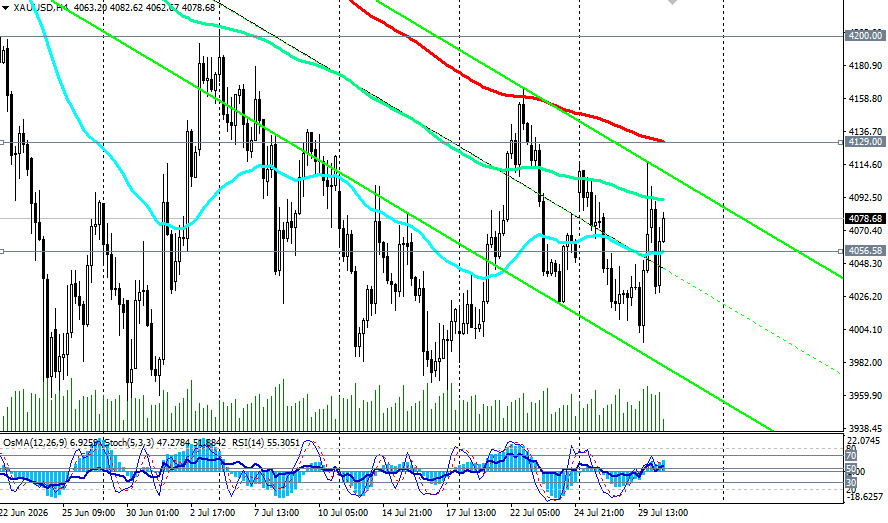
From a technical perspective, XAU/USD maintains a bearish bias, consolidating below key daily moving averages—EMA50 (4200.00), EMA200 (4290.00), and EMA144 (4350.00)—while moving within descending channels on the 4-hour and weekly charts. Since the beginning of the week, gold has attempted to establish itself above the $4100.00 level four times, but each time it faced a pullback.
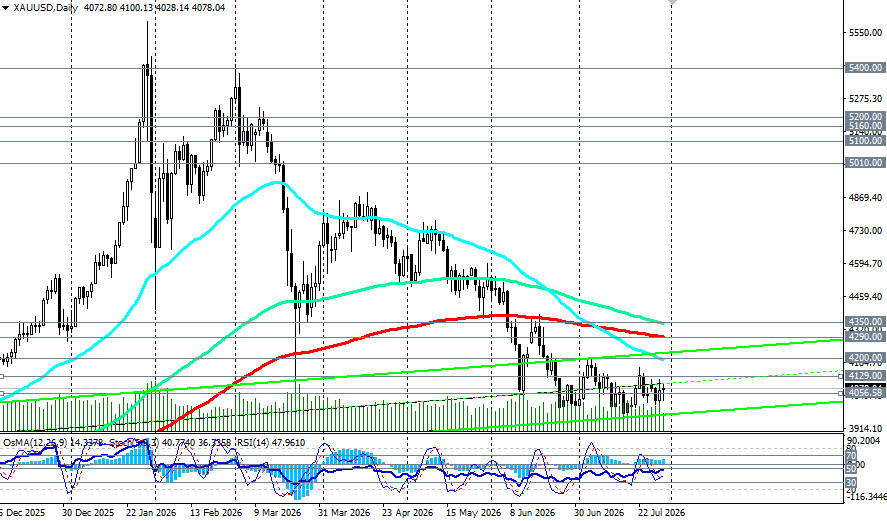
If the price breaks below the range of 4200.00-3965.00, it will likely start a deeper correction toward the levels of 3900.00-3850.00, where the lower boundary of the aforementioned descending channel on the weekly chart lies. At the same time, if signs of Fed policy easing emerge, the price may attempt an upward breakout, with the nearest target at 4200.00.
Date | Event | Forecast / Expectation | Expected Impact on XAU/USD |
|---|---|---|---|
July 30, 12:30 GMT | Preliminary US GDP data for Q2 | Expected growth of 2.1% year-on-year | Strong data = pressure on gold; weak = support |
July 30, 12:30 GMT | PCE inflation data (June) | Forecast: slowdown of core PCE to 0.2% MoM | Weak data = rise in gold; strong = pressure |
July 30, 12:30 GMT | Initial jobless claims data | Forecast: 200-204K | Rise in claims = support for gold |
July 31, 05:00 GMT | Bank of Japan meeting | Expected to keep rates at 1.00% | Indirect impact through USD/JPY dynamics |
Ongoing | Geopolitical situation in the Middle East | High uncertainty | Escalation = strengthening USD (pressure on gold); de-escalation = support for gold |
The XAU/USD pair is in a crucial phase where structural demand for gold from central banks and concerns about de-dollarization collide with short-term risks of tighter Fed policy and a strengthening dollar. The key range of 4129.00-3965.00 remains the primary watershed for short-term dynamics. This week, market attention will focus on US GDP and PCE inflation data, as well as developments in the geopolitical situation, which may provide new signals for future movements.
The spread of forecasts from leading banks (over $1400.00) reflects the high uncertainty regarding the future trajectory of the Fed's monetary policy and geopolitical developments:
For Short-Term Traders: The priority is to buy from the support level of $4000.00 with targets at $4100.00–$4200.00. Short positions should only be considered upon a breakout below $3965.00, confirmed by fundamental factors.
For Medium-Term Investors: Adopt a wait-and-see approach until the geopolitical situation and Fed signals clarify. A potential correction to $3965.00–$4000.00 could be used to build long positions, considering structural support from central banks.
Risk Management: Exercise caution due to high volatility related to geopolitical events, central bank decisions, and macroeconomic data releases. Strictly adhere to stop-loss orders and monitor developments in the Middle East as well as comments from Fed representatives.

QUICK LINKS
ForexMart is authorized and regulated in various jurisdictions.
(Reg No.23071, IBC 2015) with a registered office at First Floor, SVG Teachers Co-operative Credit Union Limited Uptown Building, Corner of James and Middle Street, Kingstown, Saint Vincent and the Grenadines
Restricted Regions: the United States of America, North Korea, Sudan, Syria and some other regions.


















 Contact Us